
PolyFrost®
The World’s Coolest Coating

Save Fuel
Reduce reefer diesel consumption by up to 20% in cycle-sentry mode. Fewer gallons burned means less exposure when prices climb.
Protect Cargo
Maintain consistent setpoint temperatures, even under peak solar load, and reduce spoilage claims.
Easy to Apply
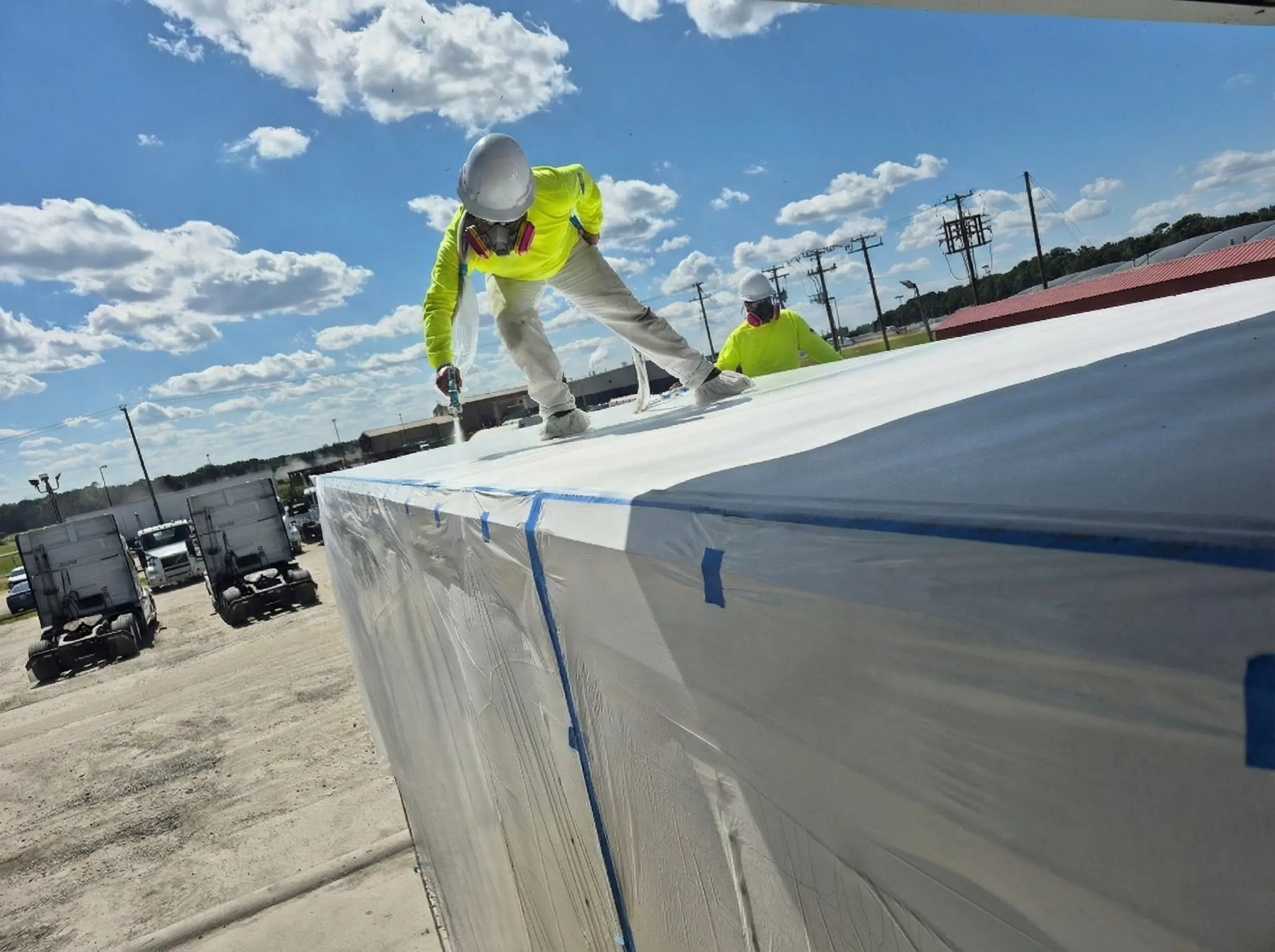
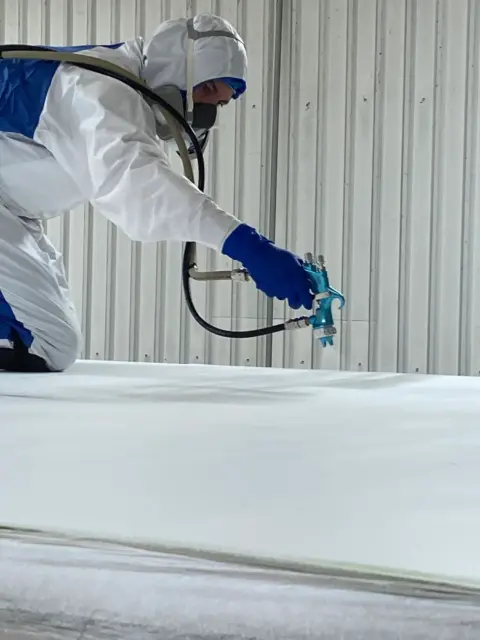
Standard spray equipment, just like paint, in under 12 hours. Retrofit or factory spec.
Improve ROI
Fewer engine hours and less mechanical strain. Supports resale position, maintenance planning, and replacement timing.
The Fleet Economics of Heat
Heat is not just an environmental consideration for fleets – it is a direct operating cost. Solar heat load forces the cooling system to work harder to hold setpoint, burning more diesel and driving up engine hours, compressor wear, maintenance events, and temperature-excursion risk.
PolyFrost complements refrigeration by reducing the work the cooling asset has to do.
It passively reduces solar-driven heat load, keeping exposed surfaces cooler and cutting thermal transfer into the vehicle or trailer.
TRU runtime reduction
20%Diesel saved over 6 years
~2100 galAve total cost of ownership saved
$24.5KAve added to asset life
1.7 yrs
PolyFrost
How it Works
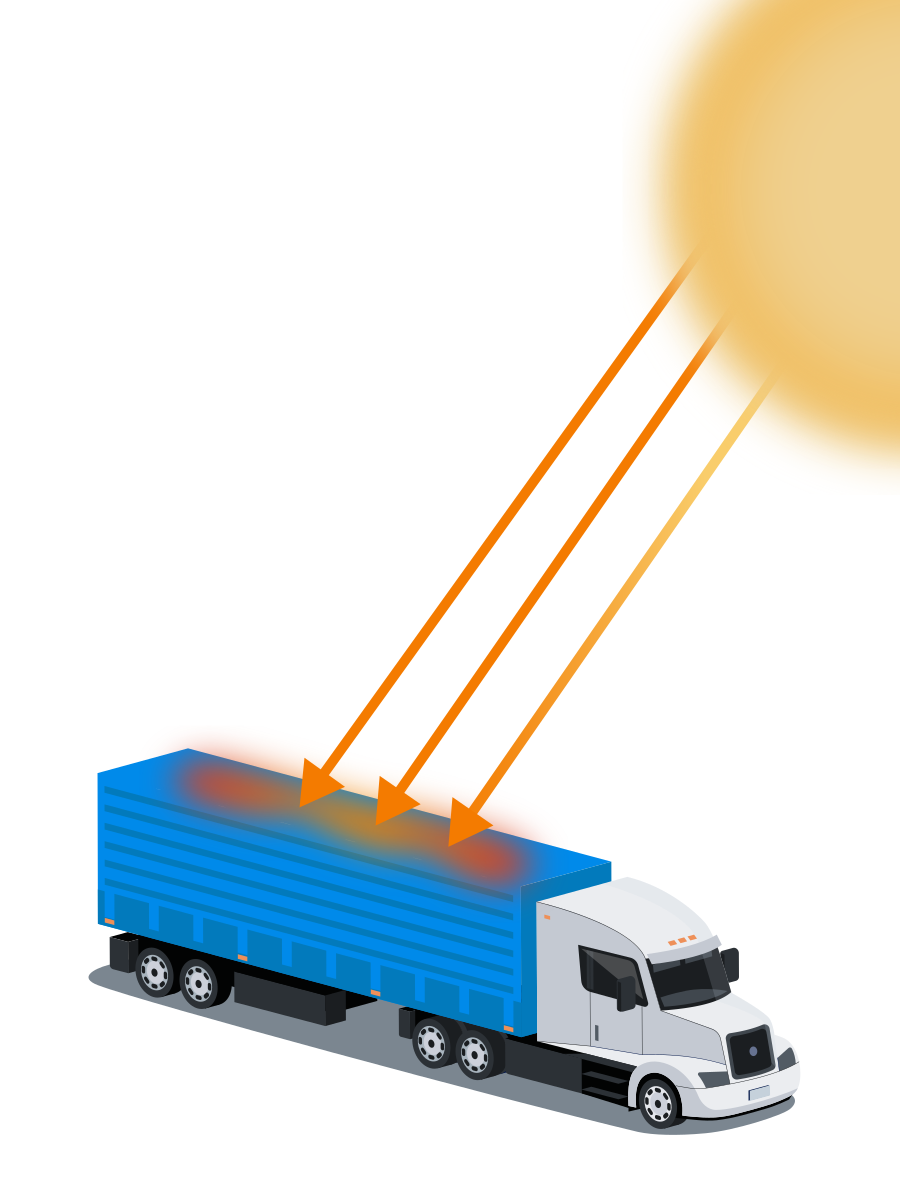
Sunlight hits a surface, and most of it becomes heat that surface holds onto.
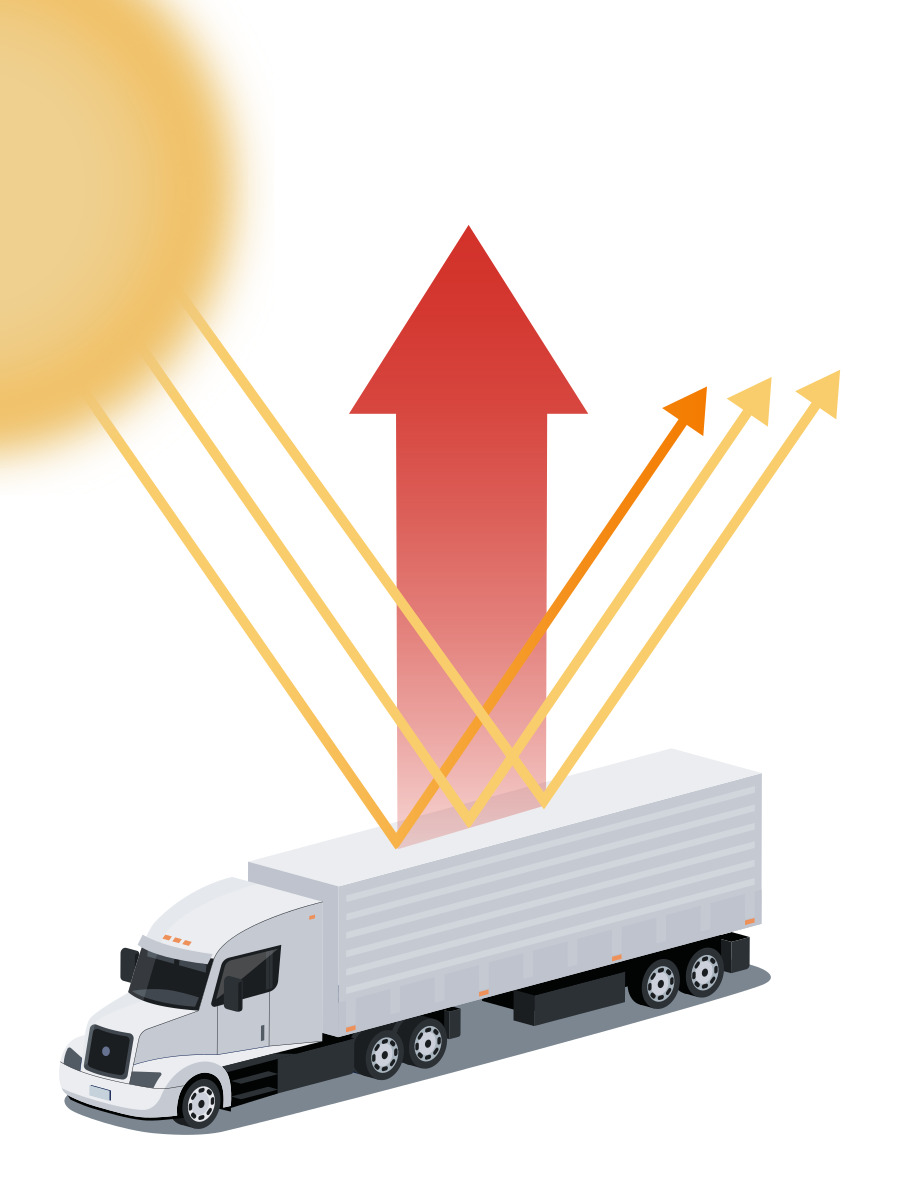
PolyFrost® keeps much of that heat from getting in, so it never becomes a load for cooling equipment to work off. It does this in two ways at once. It reflects most incoming sunlight, and releases the heat that does build up as infrared, at wavelengths the atmosphere doesn’t trap.
Because heat always flows toward cold, that energy travels out to space rather than staying in the surface. That’s why a PolyFrost-coated surface can shed more heat than the sun puts in and end up cooler than the surrounding air.
This is called Passive Daytime Radiative Cooling (PDRC). It needs no power, and it doesn’t stop at night.
Typical Surface
72°C (160°F)
PolyFrost Coating
26°C (80°F)
PolyFrost® FAQs
How does PolyFrost work?
Passive daytime radiative cooling (PDRC) is a way of cooling a surface in direct sunlight with no energy input. A PDRC material reflects most of the sun’s energy and emits heat as infrared radiation through the atmosphere’s 8–13 µm window to outer space. This lets the surface shed more heat than it absorbs, even at midday. PDRC coatings such as ChillSkyn’s PolyFrost reflect up to 97% of sunlight and emit heat with up to 94% emissivity.
Does PolyFrost need power, hardware or a control system?
No. PolyFrost has zero power draw: no wiring, no controller and no equipment to run. It is a coating, so once it is applied it works continuously, with nothing for drivers or fleets to operate.
Is passive cooling environmentally friendly?
Yes. Passive cooling uses no electricity or refrigerants, and instead of adding heat to its surroundings, the surface sends heat out to space as infrared radiation. PolyFrost also reduces emissions indirectly: by cutting transport refrigeration unit (TRU) runtime, it cuts the diesel a trailer burns by up to 510 gallons per trailer per year. Less diesel means lower greenhouse gas emissions.
How has PolyFrost’s performance been verified?
PolyFrost’s performance has been verified three ways: Mesilla Valley Transportation Solutions (MVTS) Certified third-party testing, laboratory testing to ASTM and EN standards, and controlled field pilots across North America, South America and Europe.
What is Passive Radiative Cooling?
Passive cooling is any way of lowering temperature such as shading, ventilation, or reflective surfaces, without electricity, fuel or moving parts. Passive daytime radiative cooling (PDRC) is a type of passive cooling that works even in direct sunlight. A PDRC surface does two things. It has high solar reflectance, so it reflects most incoming sunlight and absorbs little heat. It also has high thermal emissivity, so it radiates heat as infrared light through the atmosphere’s transparent window (8–13 µm) to the cold of outer space. ChillSkyn’s PolyFrost GFX is a spray-applied PDRC coating. It reflects up to 97% of sunlight, has up to 94% emissivity, and lowers roof surface temperatures by up to 50 °C (90 °F) with no power.
Does white paint work the same as PolyFrost?
No. In side-by-side trials, PolyFrost roofs ran 10–15 °C (18–27 °F) cooler than standard white polyurethane paint on passenger buses in Mexico (June 2026). In Illinois (June 2025), PolyFrost ran up to 24 °C (43 °F) cooler than another commercial reflective roof coating. PolyFrost is engineered for high solar reflectance (up to 97%) and heat emission, so a coated roof rejects most sunlight and keeps shedding heat. Unlike white paint, PolyFrost can cool a surface below the surrounding air temperature.
Do highly reflective surfaces work the same as PolyFrost?
No. Reflecting sunlight is only part of how PolyFrost cools. It pairs very high solar reflectance (up to 97%) with high emissivity (up to 94%), so it rejects sunlight and also sheds the heat it does absorb as infrared. A surface that does only one of these, such as aluminium, runs hotter. In a June 2025 trial in Pachuca, Mexico, a bare aluminum roof reached up to 70 °C while a PolyFrost roof measured 18–20 °C.