
Passive Cooling for Temperature-Sensitive Cargo
The Challenge
How to reduce thermal load, protect cargo integrity, and improve fleet efficiency without added energy consumption?
Delivery fleets transporting pharmaceuticals and frozen perishables operate under constant exposure to intense solar radiation, particularly in regions with year-round sun. Even when ambient air temperatures remain mild (15–20°C), traditional aluminum trailer roofs can reach surface temperatures up to 70°C at peak solar load. This extreme heating transfers into the trailer interior—through insulation or steel supports—raising risks of cargo spoilage in dry box units and increasing compressor demand in refrigerated vans.
The Solution - PolyFrost
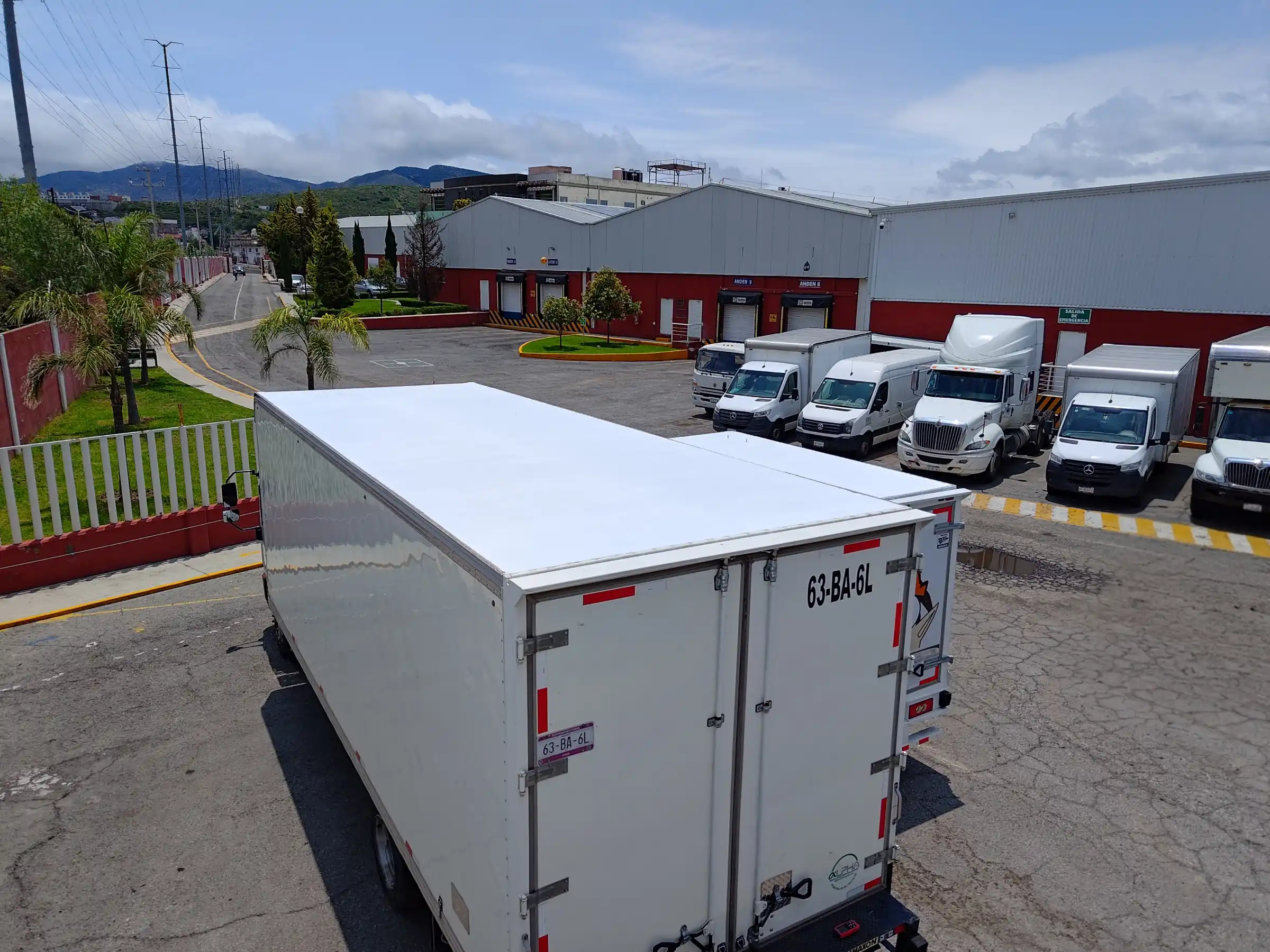
PolyFrost, ChillSkyn’s passive cooling coating, was spray-applied over the bare aluminium roof of delivery vehicles transporting pharmaceuticals (20′ dry van) and frozen goods (10′ reefer straight truck).
PolyFrost is engineered to reflect solar heat, maintain cooler roof surfaces, and reduce thermal transfer into vehicle interiors.
PolyFrost
PolyFrost is a spray-applied, passive radiative cooling (PDRC) coating designed for sun-exposed surfaces in transport and industrial applications.
Reflects Solar Radiation
Reduces surface heating.
Maintains Cooler Interiors
Without adding additional energy demand.
Scalable and Easy to Apply
Using standard spray equipment, just like paint, in under 12 hours.
Effortless Maintenance
Regular cleaning with soapy water ensures long lasting peak performance.
Results
Field Trial
- Pachuca De Soto, Mexico - June 25, 2025
- Peak solar radiation: 11:00- 12:00 am - 865 W/m2
- Outdoor temperature 17°C (62°F)


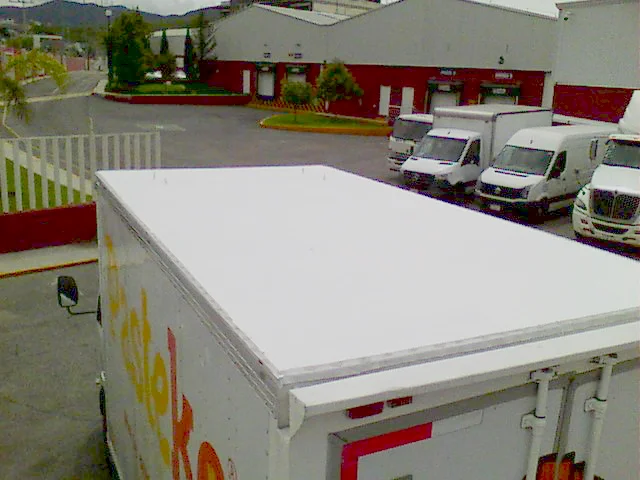
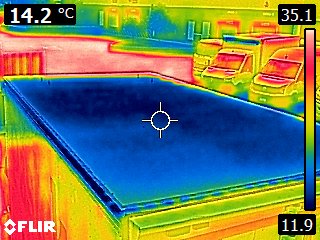
PolyFrost coated roof – up to 50°C (90°F) temperature reduction vs bare aluminum – No active cooling used
Performance Comparison | |
|---|---|
Surface temperature Bare aluminium roof | Up to 70°C (158°F) |
Surface temperature POLYFROST coated roof | 18-20°C (64 – 68°F) |
POLYFROST surface temperature reduction | Up to 50°C (90°F) |
Key Impacts
Dry Box Trailers
Cooler internal temperatures protect sensitive goods, reduce the potential for product loss, and create safer, more comfortable conditions for crews during loading and unloading.
Refrigerated Vans
Reduced compressor workload, lowering fuel consumption and extending refrigeration system life.